

I’ve had the privilege of living close to the most famous residence in America for many years. Countless times, I’ve either driven by or walked past the gates that secure but do not obstruct the view of the iconic columns at the entrance, allowing visitors from all over the world to see this symbol of America. Yet, on a recent trip to Memphis, it occurred to me for the first time that perhaps I’ve been wrong about the most famous residence in America. Maybe it’s not at 1600 Pennsylvania Avenue in Washington, DC. Maybe it’s at 3764 Elvis Presley Boulevard. Maybe it’s Graceland.
My mother has been a lifelong fan of Elvis and at some point I wondered why we’ve never been to Graceland. So I planned the trip as a gift for her, expecting to find a bunch of people like my mother, people of a certain age and from a certain demographic. I expected to be merely an escort on her stroll down memory lane, navigating a sea of seniors lost in nostalgia. But from the moment we arrived at Graceland, I realized my expectations were completely wrong. I was genuinely surprised to discover how many people were visiting from other countries. I was equally shocked to see so many younger people, although I was told this was thanks in part to Baz Luhrmann and Austin Butler. As someone who is a massive fan of Baz Luhrmann and thought his 2022 Elvis bio-pic was excellent, I’m not sure why I didn’t see that connection sooner. Our tour group included a young family from Italy with a pre-teen daughter who wore an Elvis-inspired jumpsuit and got her picture taken with all the tour guides. We also had a posh couple from London and a hipster from Scotland, plus a few other mother-daughter groups. There was so much to see at Graceland and yet I found that my gaze kept drifting to these international visitors, curious as to what made them decide to come to this part of America.
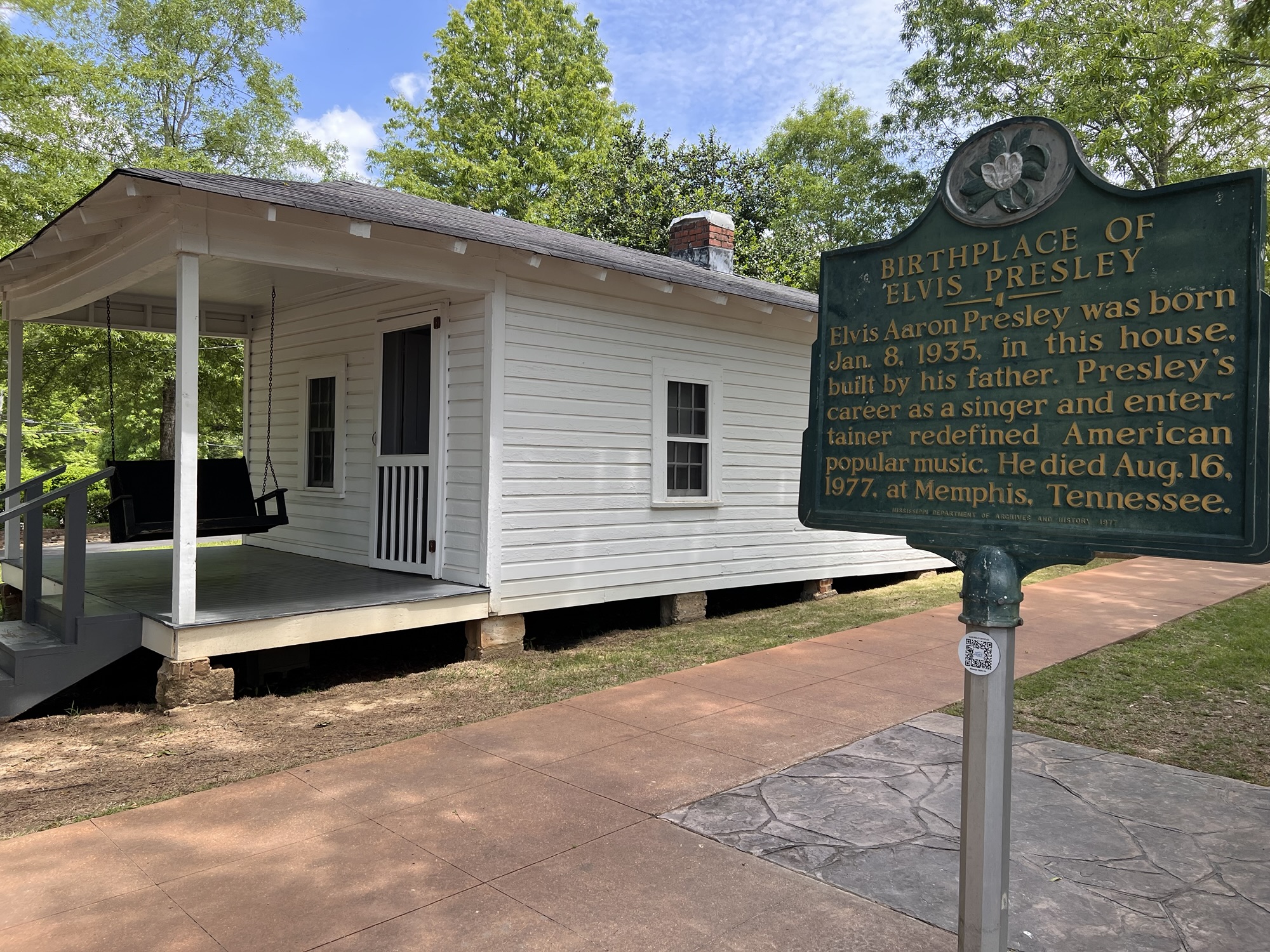
The next day, we drove to Tupelo, Mississippi to see the Birthplace of Elvis. He was born and raised in a small home with only two rooms. When it was turned into a visitor destination, the tiny church from his childhood was found and relocated to just across from the home. Guests were encouraged to watch a video presentation at the church, and as my mother and I sat in a pew waiting for the presentation to begin, we discovered that we were actually outnumbered by international visitors. There were people from Germany, Switzerland, the Netherlands, and a couple from Poland who were seated behind us. They were no older than fifty, and my mother asked them how they knew about Elvis. They told her that they watched his movies on TV growing up in Poland. She was delighted. I was astonished. How did they end up in this rural, frankly out-of-the-way spot in Mississippi? They said that they were on their way to visit family in Florida, but wanted to see Graceland and Tupelo.
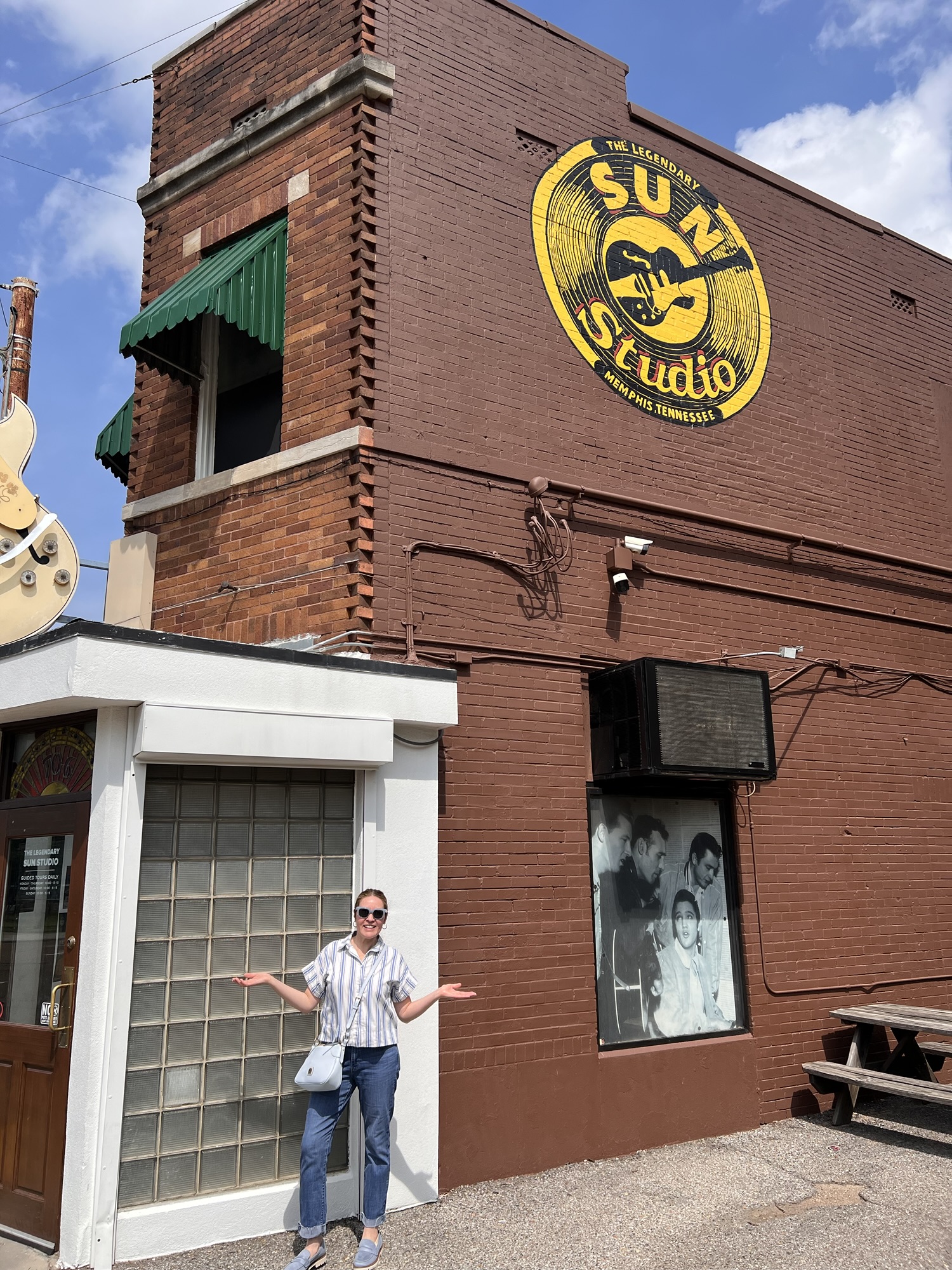
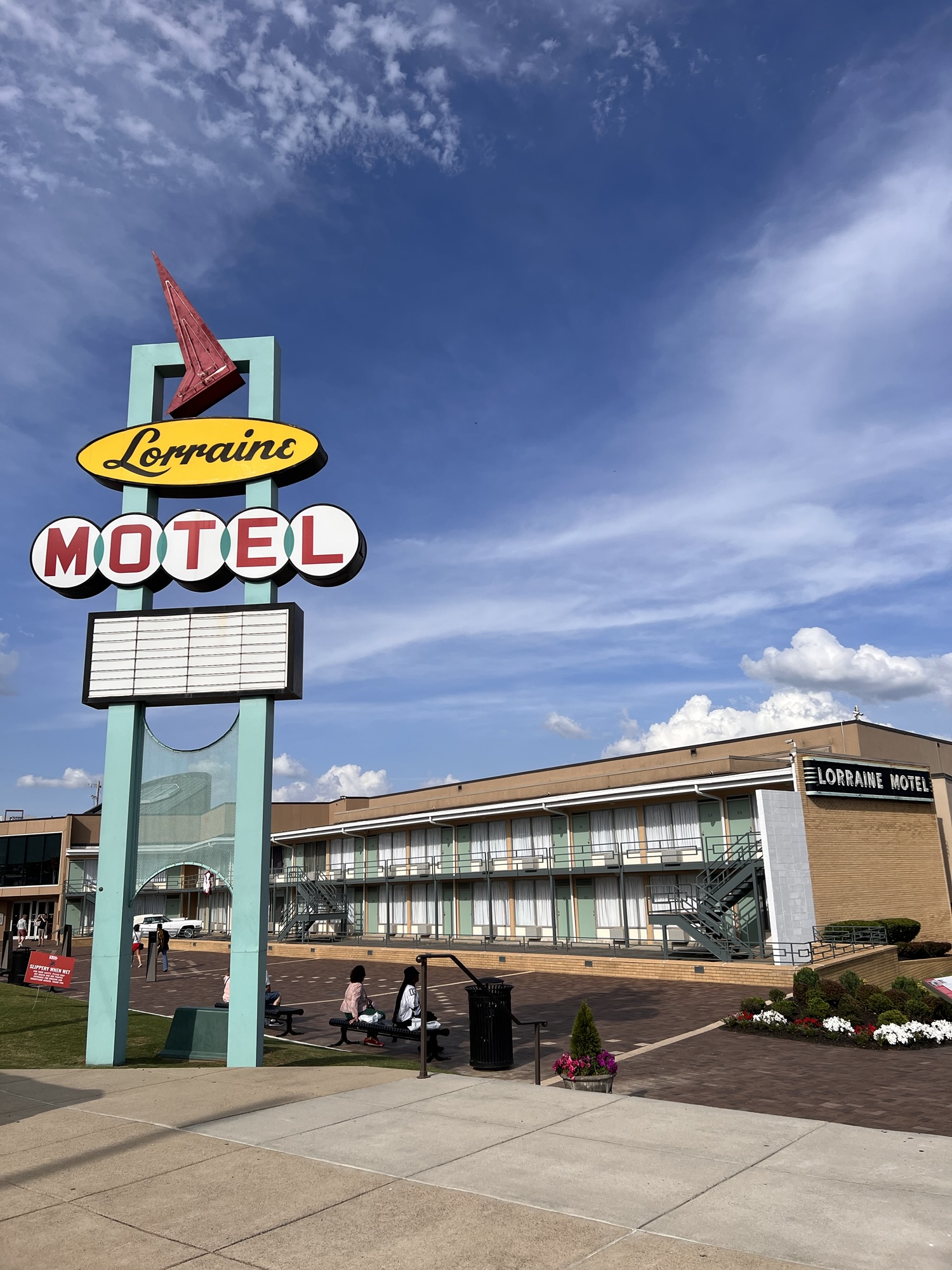
On day three, we went into downtown Memphis. We started at Sun Studio, considered the birthplace of Rock and Roll, where Elvis recorded his first hit song. By now I was becoming used to the international crowd. And yet it still blew my mind when two twenty-something young men from Japan swung open the doors to Sun Studio and joined our tour. They only spoke a little English yet knew the language of Rock and Roll. After a stroll through Beale Street that afternoon, we made our way to the Lorraine Motel. As we stood next to two gentlemen from Africa dressed in traditional attire, all of us looking up at the balcony where Dr. Martin Luther King, Jr. was assassinated, it finally became clear to me what brought all these people to Memphis.
I live in a part of the country that is saturated with the story of America’s foundation. My state is one of the original thirteen colonies. The Declaration of Independence and the Constitution are located a short drive away. Mount Vernon and Monticello – homes of our founding fathers – are an easy day trip. But while Washington, DC may be “How It Started”, Memphis is “How It’s Going.” Everything I saw in Memphis told the story of the America which we live in today. The story of a boy who grew up in a two-room house, who took his love of gospel and blues and the country music that was all around him, and together with his charismatic, mysterious “it factor”, became not just a star, but the greatest American cultural export to this day.
Memphis is also a part of the civil rights struggle in America. While Dr. King gave his famous speech at a monument closer to my neck of the woods, the impact of his words, “the arc of the moral universe is long, but it bends towards justice,” resonates deeply at the place where these words were tested. I suppose it was my pride in Washington that prevented me from not understanding it sooner. After all these years, I still get a thrill whenever I drive past the Capitol building. And yet, I have to admit that a trip to Colonial Williamsburg may as well be like going to an archeological dig. It tells me who we were. But Memphis tells me who we are. It tells the rest of the world who we are.
Yes, we are nation with a complicated origin story who have been through some things. But we’ve also given the world Rock and Roll, blue jeans, and hamburgers. Washington may be reverent, but Graceland is relevant. The exhibits that are part of the Graceland facilities are filled with the music of Elvis, as well as his cars and his clothes and other memorabilia. Graceland also holds sadness. Elvis, his mother, his daughter, and his grandson are buried on the property, all of them having died tragically young. And yet, this too is part of the American story.
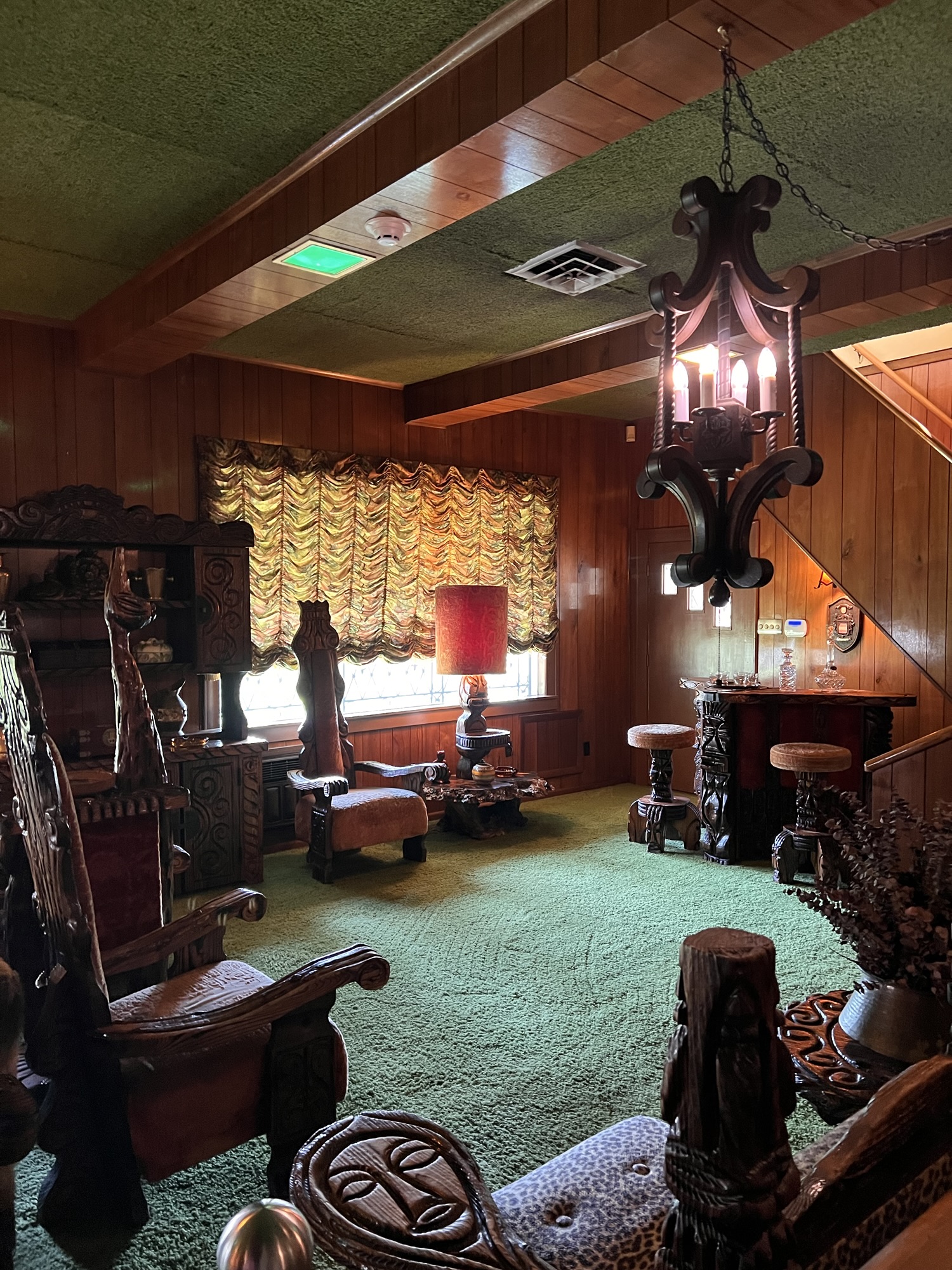
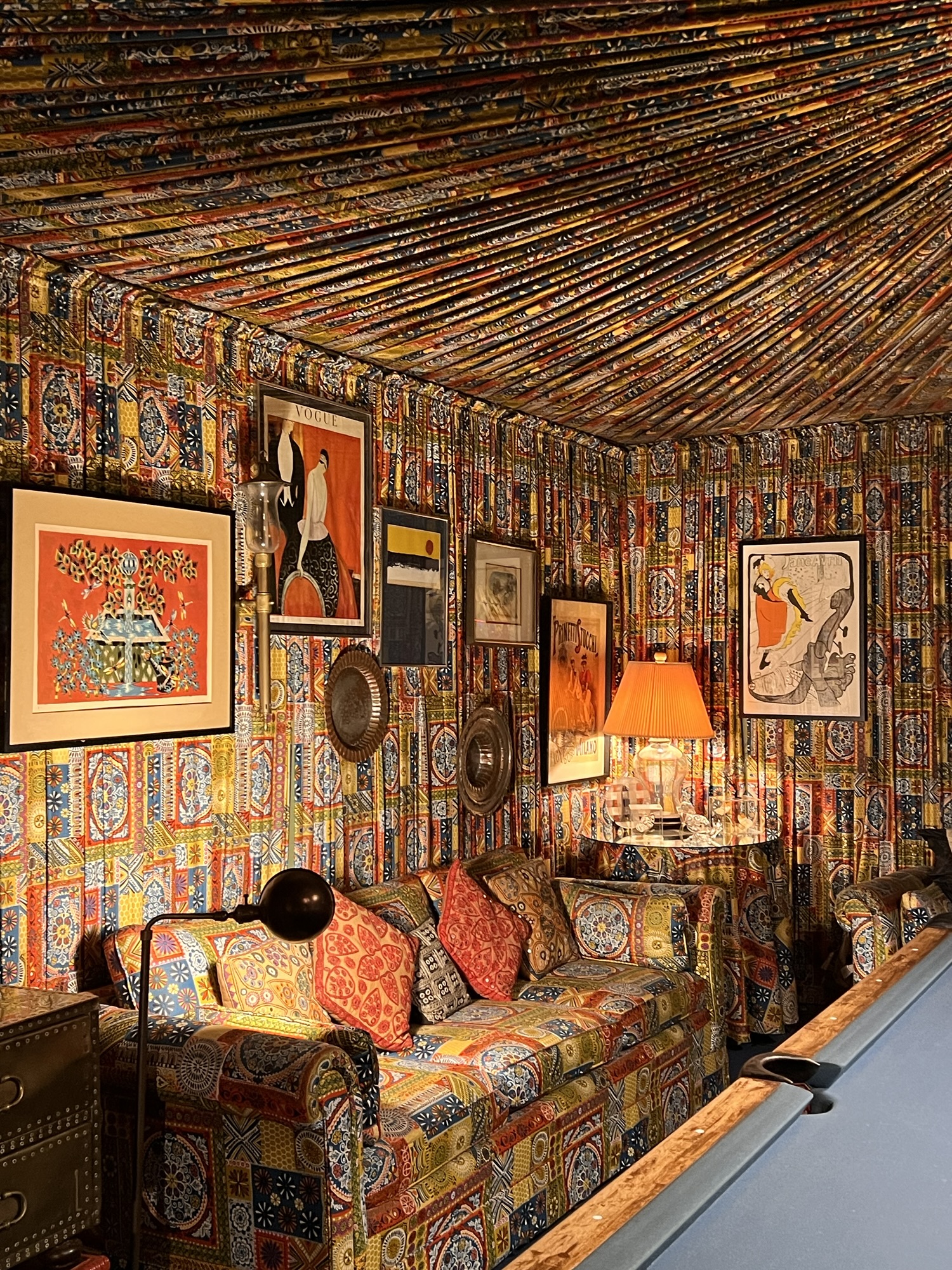
The decor at Graceland is often referenced with amusement, but I found it appealing because it’s relatable. Elvis had a television in almost every room. He had identifiable appliances that even the young Italian visitor could recognize. Visiting old castles in Europe, I’ve struggled to understand what it must have been like to live in those places. It was easy to imagine living in Graceland. It felt like a home. I appreciated his decor because it reflected his personality, and quite honestly, wasn’t any crazier than some of the decor in European palaces.
This trip was intended as a gift for my mother, but I was the one full of gratitude by the time we returned home. So, thank you, Graceland. Thank you, Memphis. Thank you very much.





 francesca amott
Leave a comment